Ayurveda, the ancient Indian system of medicine, is built on the principle that every individual is unique. This uniqueness is defined through three fundamental energies, known as doshas: Vata, Pitta, and Kapha. Understanding your dosha is the first step toward achieving balance, better health, and long-term wellness.
What Are Doshas?
Doshas are biological energies derived from the five elements (Panchamahabhuta)—space, air, fire, water, and earth. Each dosha governs specific physical and mental functions:
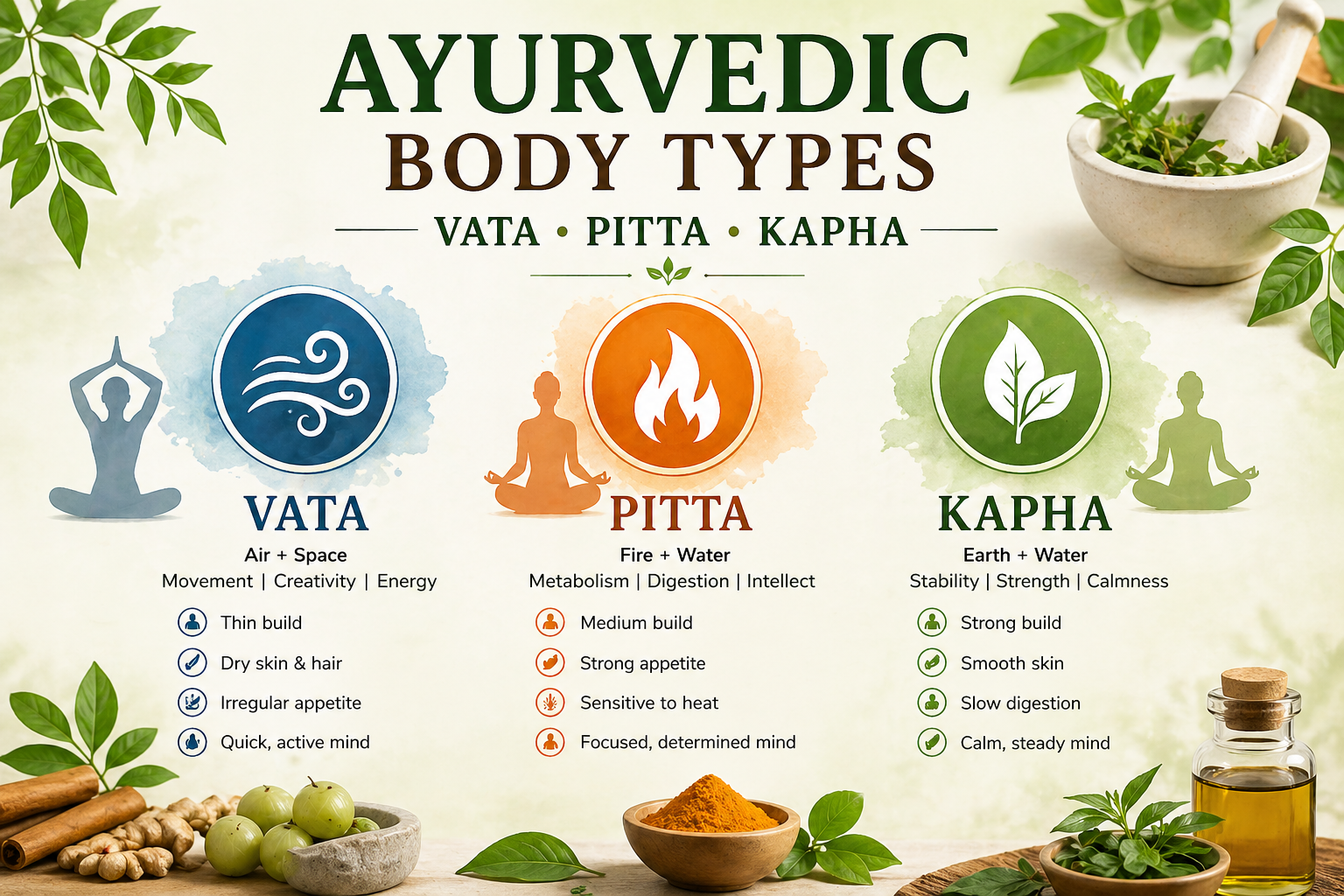
- Vata (Air + Space): Movement, communication, nervous system
- Pitta (Fire + Water): Digestion, metabolism, transformation
- Kapha (Earth + Water): Structure, stability, lubrication
Every person has all three doshas, but one or two are usually dominant. This combination is known as your Prakriti (body constitution).
Vata Dosha
People with dominant Vata are typically energetic, creative, and quick thinkers. However, when imbalanced, Vata can lead to anxiety, dryness, and irregular digestion.
Common Traits:
- Thin body frame
- Dry skin and hair
- Irregular appetite
- Quick, restless mind
Balance Tips:
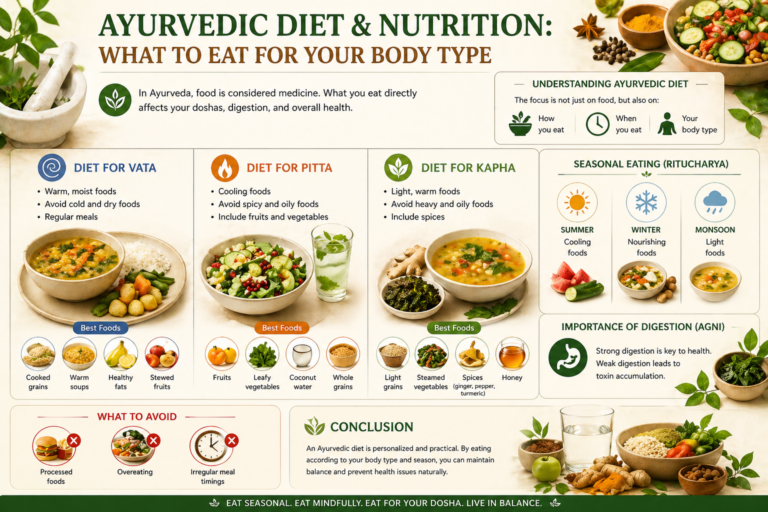
- Warm, nourishing foods
- Regular routines
- Oil massages (Abhyanga)
Pitta Dosha
Pitta types are driven, focused, and naturally good leaders. They have strong digestion but can become irritable or overheated when out of balance.
Common Traits:
- Medium build
- Strong appetite
- Sharp intellect
- Tendency toward anger
Balance Tips:
- Cooling foods
- Avoid excessive heat and spicy foods
- Practice calming activities
Kapha Dosha
Kapha individuals are calm, grounded, and strong. However, imbalance may cause sluggishness, weight gain, and congestion.
Common Traits:
- Strong, sturdy build
- Smooth skin
- Slow digestion
- Calm temperament
Balance Tips:
- Light, spicy foods
- Regular exercise
- Avoid heavy, oily foods
Why Knowing Your Dosha Matters
Understanding your dosha helps you:
- Choose the right diet
- Follow a suitable lifestyle
- Select appropriate Ayurvedic products
- Prevent diseases before they occur
Signs of Dosha Imbalance
When your dosha is disturbed (Vikriti), symptoms appear:
- Vata imbalance → anxiety, bloating
- Pitta imbalance → acidity, irritability
- Kapha imbalance → lethargy, weight gain
How to Identify Your Dosha
You can identify your dosha through:
- Physical traits
- Emotional tendencies
- Digestion patterns
- Lifestyle habits
Consulting an Ayurvedic practitioner provides the most accurate assessment.
Conclusion
Ayurveda is not a one-size-fits-all system. By understanding your body type, you can make smarter lifestyle choices that align with your natural constitution. This personalized approach is what makes Ayurveda powerful and sustainable for long-term wellness.